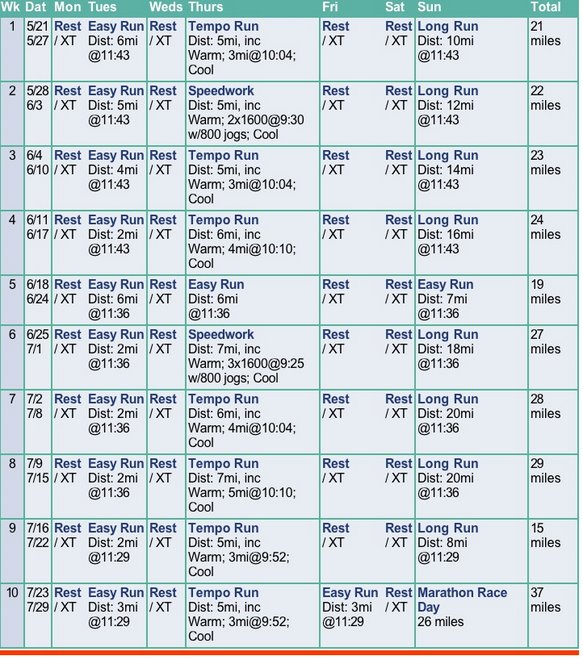
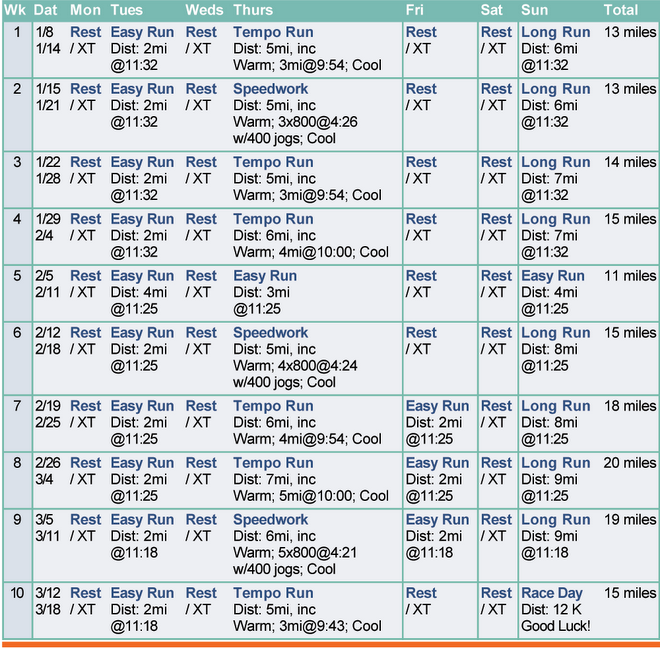
Showing posts with label Form. Show all posts

Tuesday, March 6, 2007

New Shoes

An easy and fast 2 mile morning run in the new Asics 2120s. The extra room in the toes felt good, but I'm not sure if I prefer them to the 2110s. The shoe felt a bit stiffer, and the cushioning was, well, less cushy. They were noticeably lighter though, and since my feet felt sore even before stepping into them, I'm not sure it was a fair test.

I noticed today that my footstrike seemed to be somewhere between the heel and the midfoot area, rather than fully on the heel like I thought it was. Would that change over time, or was this was my natural strike all along and I just didn't notice or couldn't tell?

Sunday, February 25, 2007

Chinese New Year 10k

Despite the night of heavy rains, 6:30am this morning dawned misty and overcast. Our downstairs neighbors had picked the night to pull an all night hang out session, and as a result what sleep we got was punctuated with trance music. They were still at it when we got up - the pitches and rumblings of their voices pressing toward us as we stumbled into our running clothes and shuffled money and sweat shirts into a backpack. Then our friends were outside in the car and we were off to Chinatown.

As soon as the race started, it was clear that Andy wasn't going to wait around for anyone. He had an ambitious goal of finishing in 53 minutes, and a slow start would kill his plans. He wished us good luck and headed out. Juanjo took off after him and Willow and I settled in at good slow pace, around an 11 minute mile. We chatted easily for the first two miles, then began upping our speed and at the end of the third mile, we were tired. I was just under my 5k time from a few weeks ago, and we still had 3+ miles to go. We watched the 5kers peel off toward the finish line, then looked in horror as volunteers pointed us up what looked like one of the steepest hills in San Francisco. I thought for a few seconds, then walked it. Willow followed my lead. It probably saved our time. At the top, we launched back in - up a smaller hill then down steeply for several minutes. "Lean forward as much as you can," I told Willow, "and rest." We passed mile 4. I'm not sure how fast we were going at that point - fast enough for it to be work, but not so fast that it was killing us. We passed mile 5, still feeling OK, and this time stopped for water. I drank a full dixie cup and immediately felt my stomach lurch, threw my second cup, still full, into the trash barrel and continued on.

As we headed into the smaller part of the enormous hill before the final sprint to the finish, Andy came jogging back toward us. We had just hit the hour mark and he knew I was going to come in near my goal time. He ran with us back up the hill and then Juanjo came up behind us and pulled us both along toward the finish line. Just as I was about to cross, Willow put on speed and passed me - grrr! Then we were walking out and handing our tags to a volunteer and climbing up to the square to get our green tea and sliced oranges. I couldn't see the clock as I crossed the line, but it was somewhere right around 1:03:30, which was exactly the goal I'd set. Since I wasn't really aware of how fast I was going for much of the run, I think I just did a good job of guessing what I would be able to do. The Nike + registered my pace as somewhere between a 5 and a 6 minute mile the whole way, not sure why, oh well . . . Andy came in very close to his goal at just over 54 minutes, and Juanjo came in with us looking very rested.

Now, if I can just do that for 26 miles, I'll have my 4:30 marathon. Eeek!

Here we are after the race. I'm in the Nike hat, Andy's in the black knit hat. Willow and Juanjo are on either side of him.


Wednesday, January 10, 2007

Hill Training

My run through the Mission Monday night convinced me to do a little more research on hill training in general. I found out that running hills might be the best thing possible for a distance runner - it seems that running hills works to strengthen muscles, improve fitness, improve form, and increase speed.

Because the runner must overcome gravity on an incline, hills work as resistance training, like lifting weights. This develops the muscles specific to running, namely the hamstrings, calves, quadriceps, and buttocks. It also helps develop the muscles around the ankles and knees, helping to prevent some of the most common running injuries.

In addition, the muscles used for hill work are the same muscles used for sprinting, so working hills improves speed, too. And because good hill running form requires an exagerated running motion - pumping the arms and lifting the knees high, form is improved along with both the length and frequency of your stride.

Since muscular fitness has been my main problem so far, it's clear that I would be well served by incorporating hills into my regular runs, mostly (at least at first) to develop the muscles that will prevent injury as I continue training.

Most of what I've read discourages speed work if you've recently suffered shin splints, so I plan to replace the speed work days on my training schedule with hill work. There are a few prominent hills in my neighborhood which I've so far taken care to avoid. Now I plan to take them head on.

Wednesday, January 3, 2007

Methods

My two mile easy run last night was uneventful. Though my leg felt a bit tight from toe to hip, I warmed up in the second mile and didn't experience any soreness on the run or afterwards. Still, I feel like I've lost a bit of momentum. I'll probably shorten my Thursday run by a mile or two, and maybe my Sunday long run as well. I know I should be pleased that I'm running at all, rather than nursing a dull ache in the leg, but I can't help feeling impatient.

Besides the Internet, my two sources of running information are Andy and our housemate Keith. Andy played juniors and college tennis, and his response to most athletic questions is to work harder, push through, do a little more. He has trouble watching me skip a day of my training schedule, even for "injury." Keith, by contrast, is the kind of natural runner who rarely suffers setbacks, and never had to learn to run. When I asked him about his foot strike a few days ago, I watched as he summoned a mental picture of his stride. He moved his foot ever so slightly. "Heel," he finally said. He once had a shin splint, but could not identify its source. He took a week off from running, then returned to his usual runs (he seems to run 6-8 miles on average).

So I'm trying to walk some kind of line between internet advice (some of which recommends taking as much as 3-4 weeks off) and Keith and Andy's advice, which would like to see me on a 7 mile run this Sunday (but not before, according the Keith). It seems to me that a little bit of running helps build muscle strength and prevents having to start from the ground up again, but that too much will continue to stress the weak area. So far, the soreness has been very minor, more of a threat than a full fledged problem, so I think it's safe to test some different approaches.

Saturday, December 30, 2006

Stretches and Exercises for Runners

I found a page of stretches and a page of strengthening exercises for runners on the NISMAT website (full link at right). It's simple stuff, but a good start for those of us who are just getting started and need to take special care to guard against overuse injuries. I plan to take it a bit easy tomorrow. If the leg feels OK, I'll take a short run, then concentrate on preparing for New Year's Eve -- we plan to have 8 or 10 friends over for dinner, drinks, and of course, champagne.

Sunday, December 24, 2006

Stow Lake


For today's long run (6 miles) we headed down to Stow Lake, looped around and headed back. Our pace was again very slow, so I tried to concentrate on form -- hips leading, trying for a mid foot strike rather than my natural heel strike. I was not at all sore from our 5 mile tempo run on Thursday and Andy was itching to increase the pace, so we sped up a bit in the last mile and came in in minute or so early. The slow pace coupled with the changes in form must have been doing something though because my legs felt like jello as we slowed to a walk at the end.

After a bit more research online when I got home, I found increasingly conflicting information about the foot strike in general. Though a mid foot strike seems to improve speed slightly, it also absorbes slightly less shock. Something like 80% of runners are actually heel strikers. The other elements of form are less controversial, and it's clear I need improvement in all of them.

Saturday, December 23, 2006

Running Form

My grandfather, who ran consistently for twenty-five years, sent me this excellent introduction to running form written by Rich Strauss. I think it's worth posting:

Many people believe that you are born with either good or bad running form, and that there is little that you can do to change it. We have all seen "natural runners," and envy their fluidity and grace. But by knowing a little bit about the physics of running and trying to adopt some of the common traits of all "good" runners, it is possible to improve on what you're stuck with.

Physics: Your body's center of gravity is in your midsection. Any force that is applied to the ground in front of this center gravity acts as a braking force to your forward movement. Picture a runner with an exaggerated running stride. Every time he plants his heel forward of his body, he applies a braking force, slowing himself down. In addition, before he is able to apply force to the ground and move his body forward for the next stride, he must wait until his body has moved directly over his foot. If you look at the form of most good runners, you will see that their feet strike the ground directly beneath their body. Running with this shortened stride is also characterized by a "mid-foot" strike (not on the heel, not on the toes, but at about the ball of the foot) and a high cadence, or "quick feet."

System Checklist
Now, having said all of this, don't watch me run. My wife Sue says that rather than run, I "lumber." But she also says I've gotten much better. This is my "System Checklist" that I use to critique my running form as I run. I start with my head and work down my body.

Head: Neutral position, don't look or down. Try to think of centering your head on your shoulders. Face muscles are relaxed and loose. Try to feel your facing bouncing with each stride. Sunglasses and a hat always help.

Shoulders: Relaxed, loose, but not "hunched forward." Think of "running proud" with your shoulders back, but don't try to actually pull them back. This creates muscle tension and is a waste of energy. Any forward lean must be supported by your lower back, changes your center of gravity, and results in wasted energy.

Arms: Any excessive side to side motion, or swinging across your body is a waste of energy. Try to think of everything moving in a straight line and in one direction: forward. Keep your elbows in and bring your arms up in a straight motion. Hands should be relaxed and loosely cupped.

Hips: Very important. This is the home of your center of gravity. Try to run with your hips forward. Pretend as if you have a rope tied around your waist and someone is pulling you forward with it.

Feet: I changed from a heel striker to a mid-foot striker and I'm convinced that this has kept me injury free. Try it if you want, but just beware. But regardless of how you plant your foot, you can try to plant it directly under your body and your center of gravity. Try running with a quick cadence of 88-90+. Simply count the number of times that your left foot strikes the ground in one minute. It will feel strange at first, but if you practice enough it will become second nature. Also, think "quick feet." Try to make as short as possible the time that your foot is on the ground. I've gone from 82 rpm at my IM pace to 90+. One of the most satisfactory compliments I've ever gotten in a race is when a spectator said "good cadence" to me at mile 25.5 at IM California. I spent a lot of time working on this and its nice to see it paid off.